
Right of Way Permits and MOT Plans
Right of Way Permitting in Southwest Florida
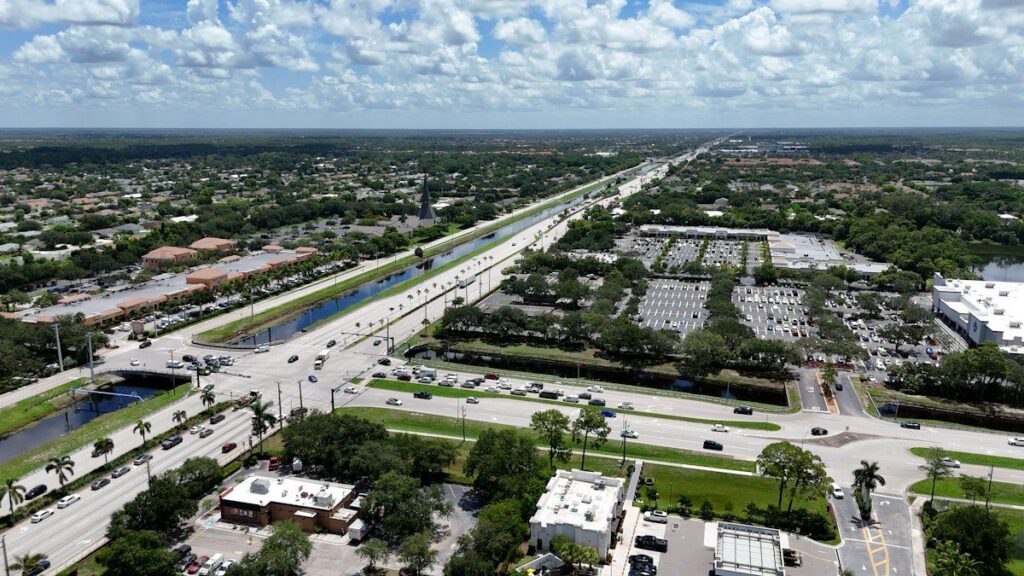
A right of way permit is permission from the road’s owner (the county, the city, or FDOT) to build or work in the public strip between your property line and the pavement: a driveway connection, a utility line, a sidewalk, a culvert under the swale. Most of them come with a maintenance of traffic plan.
That strip looks like part of your lot. It isn’t. Everything up to the property line is yours to plan. Past it is someone else’s road, and that owner reviews any work there on its own terms, with its own reviewer, its own standards, and its own timeline. It’s a separate permit from your site plan, and it’s the one that most often gets left out of the schedule.
Creek Engineering designs the road side of a project alongside the site: the connection, the utility crossing, and the road cores the county asks for at every cut. On driveway connection and utility permits, we submit the applications and handle the back-and-forth with the county and FDOT until they’re issued. When the work affects traffic, we can also prepare a conceptual maintenance of traffic plan for your contractor to use in its own permit application. We start all of it in parallel with your site permit, so the road doesn’t become the last thing standing between you and a certificate of occupancy.
What a Right of Way Permit Covers
The plainest way we can put it: if you’re building a driveway from your property line to the road, or doing anything over the swale where the water runs along the road, you’re in the right of way.
Each county words it a little differently, but the list is close to the same everywhere. Charlotte County, for example, requires a right of way permit for all work in county rights-of-way and easements, including:
- Driveways, whether new, reinstalled, widened, or resurfaced
- Culvert pipe under the driveway or along the swale
- Utility installations, overhead or underground: sewer, water, electric, conduit, cable
- Pavement construction or repair, including acceleration, deceleration, and turn lanes
- Smaller items people don’t expect, like sod, sprinklers, and storing material in the right of way
Notice the word “easements.” A utility or drainage easement across your own lot can carry the same permit requirement as the road itself, because the county holds rights there too.
On a single-family driveway, that’s often one permit. On a commercial drive, a sidewalk crossing, or anything on a state highway, it turns into several permits from more than one desk, and that’s where it starts to get complicated.
Everything up to the property line is yours to plan. Past it is someone else’s road, and the road side is the permit that most often gets left out of the schedule.
Testimonials From Our Clients
County Road or State Highway: Who Reviews Your Connection
Who owns the road decides everything else: who reviews the plans, which standards apply, and what the application looks like. In Southwest Florida that’s usually one of two owners.
County and city roads
On a county or city road, the right of way permit comes from the county’s public works or transportation desk (our Southwest Florida building departments guide lists who that is in each county). A few things we see in our counties:
- Charlotte County wants a scaled, dimensioned drawing with the application, and prefers an engineered plot plan. Freehand sketches aren’t accepted. The right of way permit is filed alongside the building permit.
- Lee County handles commercial right of way permits through its eConnect portal, requires a bond, and states plainly that a maintenance of traffic plan is required with every permit. Driveway, utility, turn lane, and maintenance of traffic permits are separate permit types.
- Sarasota, Collier, and our other counties each run their own process, with their own forms and their own reviewers. Any work in a county right of way needs a permit.
FDOT state highways
If your property fronts a US or State Road route, like US-41 or US-17, the road usually belongs to the Florida Department of Transportation, and your driveway becomes a “connection” under state law: any driveway, street, or turnout that gives access to or from the State Highway System. Nobody can build, relocate, or alter one, even temporarily, without an FDOT connection permit.
Here’s how that review works:
- Your connection gets a category based on projected vehicle trips per day, from Category A (up to 20 trips) through Category G (more than 30,000). Most of the commercial sites we work on fall in the lower-to-middle categories.
- Category C and above must request a pre-application meeting with FDOT. It’s free, and it’s the cheapest place to learn whether FDOT wants a turn lane, a different driveway location, or a shared access point.
- The connection plans must be signed and sealed by a Florida-licensed professional engineer.
- Applications go through FDOT’s One Stop Permitting portal. Seven of our eight counties sit in FDOT District One, with a Southwest Area Office in Fort Myers. Hillsborough is District Seven.
FDOT’s spacing and access rules can feel like they’re working against your site. To be fair to them, they exist so a highway like US-41 keeps moving, and every driveway onto it adds a place for traffic to slow, turn, and stop. FDOT is reviewing your connection for the next thirty years of drivers, not just your opening day.
If FDOT asks for a turn lane, that usually means a traffic warrant and a turn lane permit, and the county’s traffic department may review it too. We coordinate that work and design the lane into the site plan from the start.
When a change of use reopens your driveway permit
This is the one that surprises almost everyone. An existing FDOT driveway doesn’t stay permitted forever as-is. Florida law treats a change in the use of the property, or an expansion that raises trip generation by more than 25 percent and more than 100 vehicles a day, as a “significant change.” When that happens, the owner is expected to contact FDOT to find out whether a new connection permit is needed.
So if you’re turning a warehouse into a retail store, or a house on a state road into an office, the driveway may come back into review even if you never touch it. We check this at the start of any zoning or change-of-use project on a state highway, so it shows up in the plan instead of at the end.
Utility Crossings: Open Cut, Directional Drill, and the Utility Permit
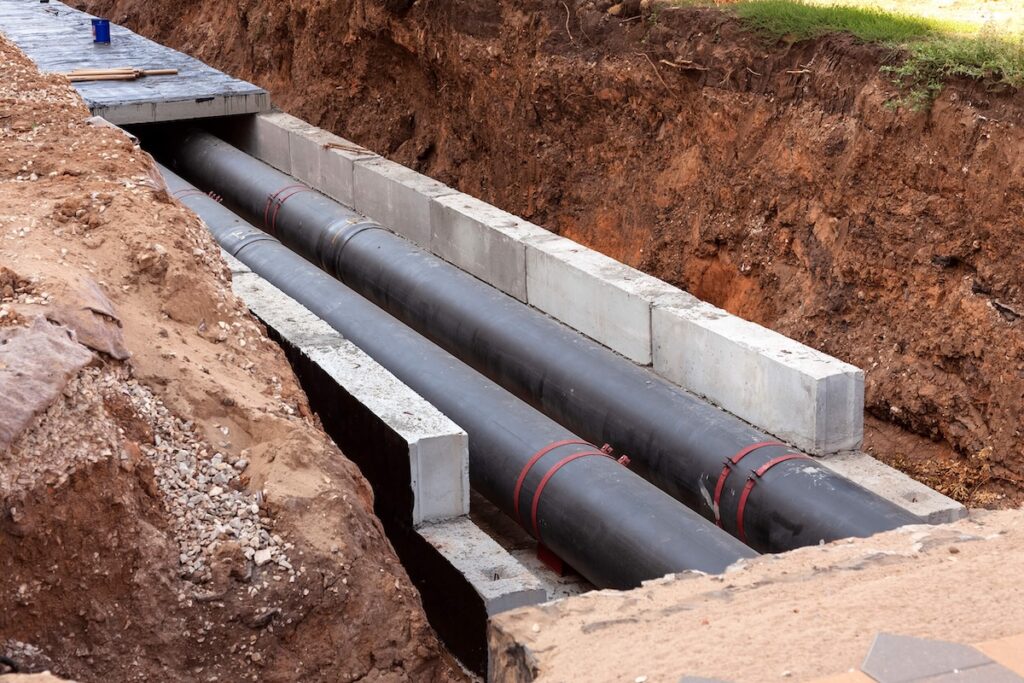
When a sewer, water, or force main has to cross a road or run down it, the road owner reviews the line the same way it reviews a driveway. The questions are simple and the answers have to be exact: where does the line go, how deep is it, and how big is it?
There are two ways across a road:
- Open cut. Trench across the pavement, lay the pipe, backfill, and rebuild the road. It works on a quiet residential street, where traffic can go around.
- Directional drill. Bore under the road without opening it. On a busy commercial road, we generally lean on a directional drill, because shutting that road down usually isn’t an option.
On a state highway, the line needs an FDOT utility permit, and the design follows FDOT’s Utility Accommodation Manual, which sets where utilities can sit in the right of way and how much cover they need. On a county road, the county issues its own utility permit.
A utility extension that runs along a road brings one more requirement. At every manhole and every cut, the county wants to know exactly what pavement section is there today, so the repair can match it. That’s reasonable: the county will be maintaining that road long after your project is finished, and a patch that doesn’t match the road around it fails early. That’s what road core testing is for. On a road core job, our own crew does the coring and sets up the traffic control.

Maintenance of Traffic (MOT) Plans
What an MOT plan is
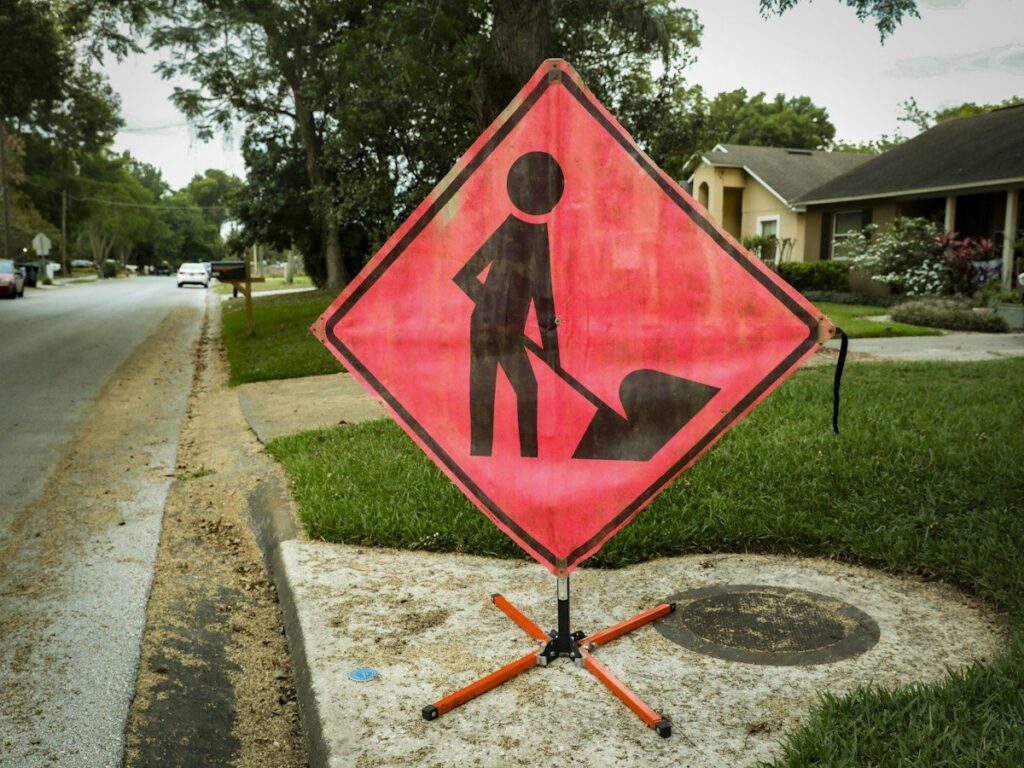
A maintenance of traffic plan shows how traffic keeps moving safely past your work: where the cones and signs go, which lane closes, where flaggers stand, and at what times. You’ll also see it called a traffic control plan, a temporary traffic control (TTC) plan, or just MOT. They’re the same document. FDOT’s current term is temporary traffic control.
The plan has to be specific. Every department that touches the road needs to know where the cones are going to be and when, and every one of them signs off.
A standard FDOT index or a sealed custom plan
Here’s the part that isn’t published anywhere in plain language. On an FDOT connection, the state gives you two ways to meet the traffic control requirement. Under Rule 14-96.005 of the Florida Administrative Code, the applicant can either cite an unmodified FDOT standard traffic control index or submit a traffic control plan signed and sealed by a Florida-licensed engineer.
The standard indexes live in FDOT’s Standard Plans, Index 102-600 series. It’s a book of common work-zone layouts: work beyond the shoulder, work on the shoulder, a lane closure on a two-lane road, a multilane lane closure, intersection work, a sidewalk closure, and more. When your work matches one of those layouts exactly, citing the index is the efficient answer.
When it doesn’t match, the plan has to be drawn for your site. That happens when the work sits near an intersection or a signal, when it moves along the road over several days, when there’s a second driveway or a bus stop in the zone, or when the site simply doesn’t fit any standard layout without modification. A modified index isn’t a standard index anymore, so it needs a sealed plan.
When you need one
- Any work in a traveled lane, a shoulder, or a sidewalk on a public road
- Every commercial right of way permit in Lee County, by the county’s own rule
- FDOT connections and utility work, through the index or sealed-plan choice above
On a private or HOA road, there’s usually no permit asking for an MOT plan. We still set traffic control when our own crew is standing in the road, because the people driving past don’t know the road is private.
What Creek provides, and who applies
Creek provides a conceptual MOT plan for your contractor’s use. It’s based on the road impacts your contractor has communicated to us and on FDOT’s published specifications, and it’s meant to support the contractor’s discussion, application, and negotiation with the county, city, or FDOT.
Your contractor is the applicant. Creek doesn’t sign and seal the plan or apply for the MOT permit. The contractor or the company doing the work provides the cones, signs, and flaggers, or subcontracts them to a traffic safety company.
The exception is road core testing. When we’re coring the road, we design the traffic control, apply for the permit, and set it up ourselves.
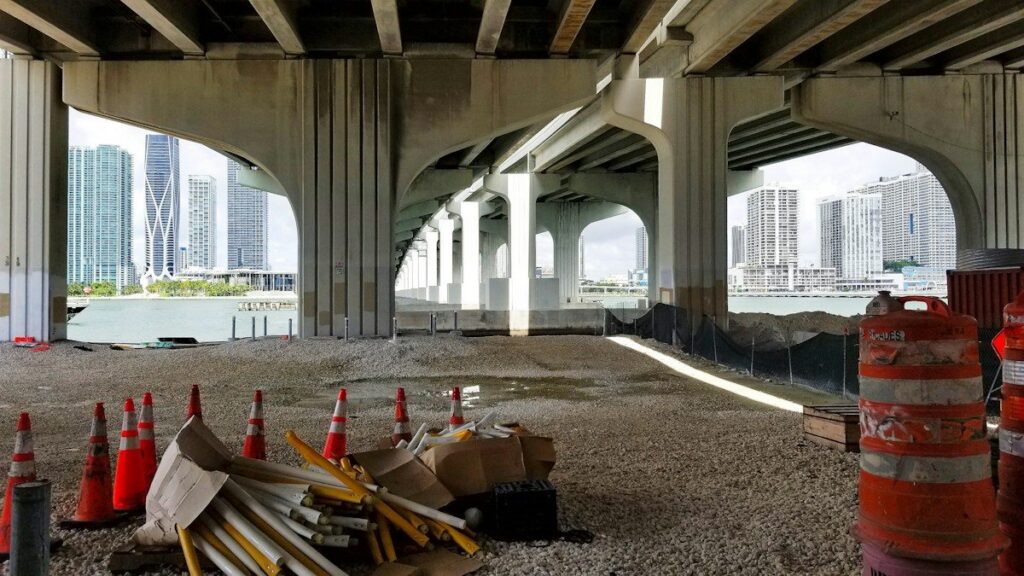
Plan for a short window. You may ask for five or ten days in the road and be told you have two, so have your contractor lined up before the permit is issued. And the setup has to match the approved plan in the field. After a crash in a work zone, attorneys and insurers will check it, down to where the cones were placed.

Locations We Serve
We’re based in the city of Port Charlotte and serve the entire area of Southwest Florida, especially the following counties:
- Charlotte County – Port Charlotte, Punta Gorda, Deep Creek, Rotonda West, Cleveland, Burnt Store, Charlotte Harbor, etc.
- Collier County – Naples, Everglades City, Naples Manor, Goodland, etc.
- DeSoto County – Arcadia, Ft. Ogden, Nocatee, etc.
- Glades County – Moore Haven, Buckhead Ridge, Palmdale, Lakeport, Ortona, etc.
- Hardee County – Wauchula, Bowling Green, Zolfo Springs, Ona, Limestone, etc.
- Hendry County – LaBelle, Harlem, Clewiston, Montura, etc.
- Highlands County – Sebring, Avon Park, Lake Placid, Lorida, Venus, etc.
- Hillsborough County – Tampa, Ruskin, Plant City, etc.
- Lee County – Bonita Springs, Fort Myers, Cape Coral, Estero, etc.
- Manatee County – Bradenton, Lakewood Ranch, Bayshore Gardens, Palmetto, etc.
- Sarasota County – North Port, Venice, Sarasota, Englewood, Nokomis, etc.
How the Road Side Fits the Rest of Your Site Permit
Take a one-acre warehouse on US-41 with a new sewer connection. Out of roughly ten permits on a project like that, four or five are on the road side alone:
- An FDOT utility permit, once the sewer line enters FDOT’s right of way
- A county utility permit for the connection to the county system
- An FDOT driveway connection permit for the entrance
- An FDOT drainage permit if a culvert or swale discharges toward the highway
- A traffic warrant and turn lane permit, if FDOT asks for a turn lane, reviewed by the county’s traffic department as well
None of those agencies coordinates with your site plan reviewer, and none of them publishes a combined checklist. Nobody should be expected to know this going in. What matters is when it starts: your site permit and your right of way permits are two different reviews with two different agencies. Run them in parallel, or the road connection becomes your critical path.
A drainage connection to FDOT right of way also carries its own storm standard, analyzed for storms up to a 100-year event, so we model it with the rest of your site drainage.
What we need from you
You don’t need a finished site plan to start. Send us what you have:
- A survey, or the most recent one you have
- A site plan or concept, even a rough one
- The road name, so we can confirm whether it’s a county, city, or FDOT road
- The proposed use and, if you know them, rough trip counts or hours of operation
- Any utility provider letters (availability or capacity) you’ve received
- Existing permits on the property, especially any FDOT connection permit
If the project is still at the “should we buy this” stage, a lot feasibility study gives you an early read on access: whether a driveway is likely to be approved where you want it, and what the road side might require before you’ve spent design money.
What we handle, and what we don’t
What we handle: the driveway connection design, utility crossing design, conceptual maintenance of traffic plans for your contractor’s application, road core testing and pavement restoration specs, the signed and sealed connection and utility plans each agency asks for, and the connection and utility permits: we submit the applications and handle the back-and-forth with the county and FDOT until they’re issued. All of it is coordinated with the rest of your commercial site work, any site plan modifications, and our civil engineering.
What we don’t: we don’t sign and seal MOT plans, apply for MOT permits, or set traffic control on another contractor’s job. Structural engineering is referred out to a partner firm. We coordinate turn lane traffic studies when FDOT or the county asks for one.
Why Creek
We’ve been serving Southwest Florida since 2002, with civil, geotechnical, environmental, and septic engineering under one roof. On the road side, that means the connection, the utility crossing, the cores, and the conceptual traffic plan come from one team instead of four vendors, and they’re drawn alongside your site plan instead of after it. You work with the same people from the first call through the final inspection.
It’s a real undertaking, and it has to be planned carefully. It’s not high stakes, though, because there’s always a solution. We’ve walked this road before, and we know where the holes are.
Partners & Organizations


Let's Talk About Your Right of Way Permit
Send us what you have. A survey, the road name, and a rough idea of what you’re building are enough to start. Use the form below or call (941) 624-6425.
Right of Way Permits and MOT Plans
Frequently Asked Questions
A right of way permit is permission from the road’s owner, usually the county, city, or FDOT, to build or work in the public strip between your property line and the pavement. It covers driveways, utility lines, sidewalks, culverts, and pavement work, and it’s separate from your site or building permit.
Whoever owns the road. On a county or city road, it’s that county’s or city’s public works or transportation department. On a US or State Road route, it’s FDOT: District One for most of Southwest Florida, District Seven for Hillsborough County.
Yes. A new, widened, or relocated driveway needs a right of way permit from whoever owns the road. On a county or city road that’s the local public works or transportation desk. On a US or State Road route, it’s usually an FDOT driveway connection permit.
US and State Road routes, like US-41 and US-17, are generally part of the State Highway System and belong to FDOT. Most other roads belong to the county or city. If you’re not sure, send us the address and we’ll confirm it.
There isn’t one. Maintenance of traffic (MOT), traffic control plan (TCP), and temporary traffic control (TTC) plan all describe the same document: how traffic moves safely past work in or near the road. FDOT’s current term is temporary traffic control.
On an FDOT connection, yes, if your work matches one of the standard layouts in FDOT’s Standard Plans, Index 102-600 series, without modification. If it doesn’t fit, the traffic control plan has to be signed and sealed by a Florida-licensed engineer.
No. We provide a conceptual MOT plan for your contractor to use in its permit application, and the contractor is the applicant. The exception is road core testing, where we design the traffic control, apply for the permit, and set it up ourselves.
It can. Florida law treats a change in use, or an expansion that raises traffic by more than 25 percent and more than 100 trips a day, as a significant change. The owner is expected to contact FDOT to find out whether a new connection permit is needed. We check this at the start.
Usually not for a permit, because there’s no public road owner asking for one. We still set traffic control when our crew is working in a private road, because the people driving past don’t know it’s private.