You ordered a Phase 1 Environmental Site Assessment expecting a clean report, and it came back with a recognized environmental condition. Now there’s a closing date on the calendar, a lender asking questions, and a term in the conclusions section you may never have seen before.
Take a breath. A REC is a reason to look closer, not proof that the ground is contaminated, and plenty of properties with one still get bought, financed, and built on. This article walks through what the finding actually says, the four decisions it puts in front of you, what a Phase 2 environmental site assessment involves, and what Florida’s cleanup rules look like if sampling does turn something up. If you’re earlier in the process than this, our Phase 1 ESA resources page is the better place to start.
First, Read What the Report Actually Called It
A Phase 1 written to the ASTM E1527-21 standard sorts what it finds into a handful of categories, and they don’t all mean the same thing for you. These terms get used loosely at the closing table, so it’s worth reading the exact word the report used before anyone starts reacting to it.
| What the report says | What the standard means | What it usually means for you |
|---|---|---|
| Recognized environmental condition (REC) | Hazardous substances or petroleum products are present, or likely present, because of a release, or are there under conditions that pose a material threat of a future release | This is the one that changes your next step. Something needs a decision before closing |
| Controlled REC (CREC) | A past release that’s been addressed to the regulator’s satisfaction, with contamination allowed to stay in place under controls such as use restrictions | The cleanup is done, but the controls come with the property. You inherit them, and they can limit what you build |
| Historical REC (HREC) | A past release addressed to the regulator’s satisfaction and meeting unrestricted use criteria, with no controls left on the property | The history is real, but the agency has closed it without strings. Usually not a deal issue |
| De minimis condition | A condition that generally doesn’t threaten health or the environment and generally wouldn’t draw enforcement | Not a REC at all. Note it and move on |
If the shorthand starts to blur, every one of these terms is in our engineering glossary.
Two things are worth checking while you have the report open. First, find the environmental professional’s opinion on each finding. That opinion is where the report explains why something was called a REC and, often, what further investigation would answer the question. Second, look at how many RECs there are and where each one sits on the property. One former fuel tank in a corner of the parcel is a very different conversation from a site whose whole history is the concern.
In Southwest Florida, the REC we see most often is ordinary. A leaking underground storage tank. A spill a truck reported up the road. An auto shop that sends batteries and tires out for recycling. Any dry cleaner, because of the chemicals they use, will show up as a potential environmental condition. As Erik Colleen at Creek puts it, “You drive down the street and you’re passing 30 of them within a mile.”
None of those should stop you from buying an office building next to an auto shop, or building a house within a mile of a dry cleaner. They’re reported because the standard requires it. The question your decision should turn on is narrower: is there something here that’s going to affect your health, or cost a lot to clean up on this property?
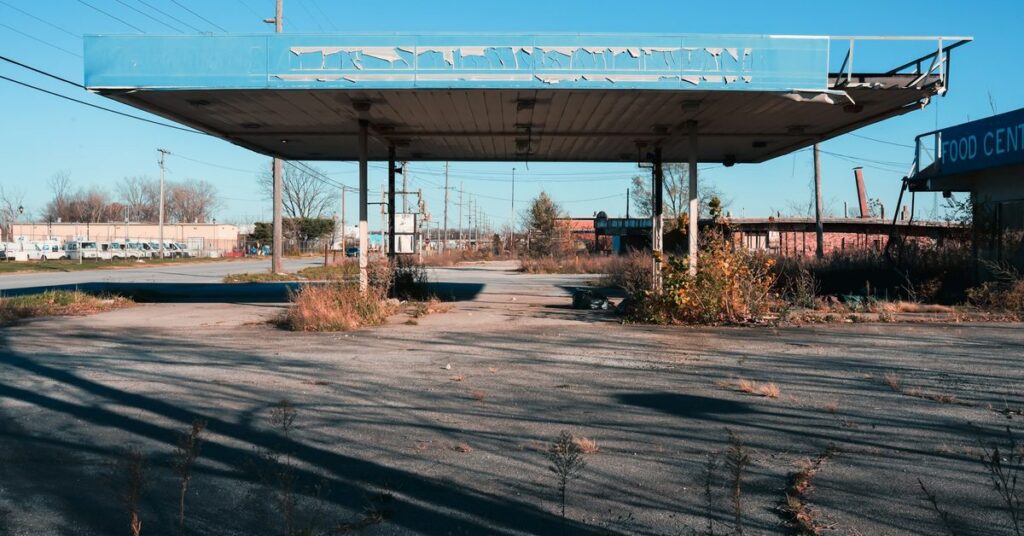
That’s rare, but it does happen. The sites that tend to carry real problems are former phosphate mining land and old golf courses from the 1960s and ’70s, where fertilizers and chemicals were stored and used in bulk and may have leached into the ground. Cleaning up a site like that can mean removing and treating large volumes of soil, and the cost can run to millions before homes can safely be built on it.
Why a REC Isn’t the Same Thing as Contamination
A Phase 1 doesn’t sample anything. It’s a records review, a site visit, and interviews, so every REC is a professional judgment drawn from history and observation rather than a lab result. That’s why the definition includes the word “likely.”
In Southwest Florida, that judgment usually rests on the site’s past life. A 1950s aerial shows grove rows. A county record shows an underground tank that was never documented as removed. A state database lists a dry cleaner two parcels away. Each of those is a legitimate reason to suspect something, and none of them tells you whether anything is actually in the soil or groundwater today.
It can feel like the standard is being overly cautious. To be fair, it has to be. The whole point of a Phase 1 is to protect a buyer’s CERCLA liability defenses, and a report that waved off a likely release because nobody had proof yet would fail the person who paid for it. A REC is a reason to look, not proof of contamination, and a Phase 2 is how you find out which one you’re holding.
The Four Decisions on the Table
Once you know what the report called it, there are really four ways forward. They aren’t mutually exclusive, and the right one depends on how much time is left in your inspection period, what you plan to build, and what your lender will accept. Your real estate attorney should be part of this conversation, because most of these moves live in the purchase contract.
1. Walk away. If the finding is serious, the site’s history is long, or the economics were thin to begin with, walking is a legitimate outcome. It isn’t a failure. You found out for the price of a Phase 1 instead of the price of owning someone else’s cleanup, and that’s exactly what the report is for. This is why we always tell buyers to protect enough inspection period to make a decision after the report lands.
2. Renegotiate. A REC is new information, and new information moves deals. Buyers commonly ask for a price reduction, a holdback or escrow sized to the likely cost of investigation, a seller-funded Phase 2, or for the seller to address the condition before closing. Which of those is realistic depends on the seller and the market. The finding gives you a legitimate basis to ask.
3. Order a Phase 2. If you need to know what’s actually there before you decide, a Phase 2 answers the question the Phase 1 couldn’t. Its job is to quantify the problem: lab sampling that tells you how significant the release is, so you can put a number on the cleanup and negotiate your price from there. You wouldn’t order one because of a tire shop or a laundromat next door. You might for an old gas station parcel with a leaking tank, when you plan to buy it and need to know what it will really cost you. It costs more and takes longer than the Phase 1 did, so it makes the most sense when the deal is worth protecting and the answer would genuinely change your decision. It’s also the step a lender is most likely to ask for.
4. Close with conditions. Some buyers close knowing about a REC, priced in, with protections in the contract. Federal law allows for that: under EPA’s guidance, a bona fide prospective purchaser can acquire property knowing about contamination and keep CERCLA protection, provided they completed All Appropriate Inquiries before buying and meet ongoing obligations afterward, such as taking reasonable steps to stop or prevent releases and not interfering with any cleanup. A CREC lands here almost by definition: the cleanup is done, and you’re agreeing to live with the controls.
Lenders often narrow these choices for you. Many won’t fund a loan with an unresolved REC in the file, and the lender’s environmental reviewer may decide whether a Phase 2 is required before you get a vote. If you’re financing, ask the lender early what they’ll need to see.
What a Phase 2 Environmental Site Assessment Involves
A Phase 2 is the sampling step. Where the Phase 1 read the records and walked the property, the Phase 2 puts equipment in the ground and sends samples to a lab. ASTM publishes a separate standard practice for it, ASTM E1903-19, built around investigating the specific areas of concern rather than testing the whole site blindly.
Here’s roughly how one runs:
- A sampling plan built on the RECs. Each REC becomes a question: is there petroleum where the old tank sat, is there arsenic in the topsoil of the former grove, is there solvent in the groundwater downgradient of the dry cleaner? The plan decides where to sample, how deep, and what to test for.
- Fieldwork. Usually soil borings, often with direct-push equipment, and temporary wells to collect groundwater. Where vapor intrusion is a concern, the plan may include soil gas sampling too.
- Lab analysis. Samples go to a laboratory for the specific contaminants the RECs point to. Testing for petroleum compounds is a different analysis from testing for metals or chlorinated solvents.
- Comparison to Florida’s cleanup target levels. Results are measured against the soil and groundwater cleanup target levels in Chapter 62-777, F.A.C. Those levels depend on use. For arsenic in soil, the residential target is 2.1 mg/kg and the commercial or industrial target is 12 mg/kg, which is why the same result can be a problem for a subdivision and acceptable for a warehouse.
- The report. The Phase 2 report states what was found, where, and at what concentrations, and whether the results exceed the applicable levels.
What drives the cost and the timeline
We don’t publish Phase 2 pricing, because we don’t perform the sampling ourselves, and because the range is wide enough that a number without a site attached wouldn’t help you. What we can tell you is what moves it:
- How many RECs there are, and how far apart. Each area of concern needs its own sampling locations.
- Which media get sampled. Soil only is the simplest scope. Adding groundwater means installing and sampling wells, and soil vapor adds another layer.
- What the lab is testing for. A broad analyte list costs more than a targeted one, which is one reason a well-written Phase 1 saves you money on the Phase 2.
- Depth and access. Deeper borings, paved surfaces, active businesses, and wet ground all affect how long the field crew is on site.
- How fast you need it. Driller scheduling and lab turnaround set the pace. Rushed lab work is available and costs more.
On timing, plan in weeks rather than days, and talk to your attorney about extending the inspection period before you commit to a Phase 2 rather than after. A Phase 2 that finishes the day after your contingency expires doesn’t do you much good.
If the Phase 2 Finds Something: Florida’s Path
If sampling confirms contamination above Florida’s cleanup levels, the property enters a defined regulatory process. Almost nobody walks into this knowing how it works, and there’s no reason you would. Here’s the shape of it.
Chapter 62-780 sets the process. Florida’s Contaminated Site Cleanup Criteria, Chapter 62-780, F.A.C., is the FDEP rule that governs how a contaminated site gets assessed, cleaned up, and closed. It runs from site assessment (defining how far the contamination extends) through risk assessment, monitoring or active remediation, and finally a No Further Action determination.
Closure comes in more than one form. A site can close with No Further Action and no restrictions, or it can close with No Further Action with Controls. The second path allows some contamination to stay in place where it’s managed by institutional controls, such as a restriction limiting the property to commercial use, and engineering controls, such as a permanent cover over impacted soil. That’s what a CREC looks like after the fact. It’s worth knowing that this path exists, because it often turns an expensive full cleanup into a manageable one that fits what you actually intend to build.
That flexibility isn’t a loophole. The rule is built on risk, and a parking lot over capped soil at a commercial site doesn’t expose anyone the way a backyard does. Matching the cleanup to the use is a reasonable way to spend cleanup dollars, and it’s the reason a site that would never close for a subdivision can close for a warehouse.
Some findings carry a reporting obligation. Under Rule 62-780.210, discovering petroleum contamination, including through groundwater sampling results that exceed Florida’s cleanup target levels, triggers notice to FDEP on its Discharge Report Form, unless the contamination is from a discharge that was already reported. Contamination found to extend beyond the property boundary carries its own notice requirement. Who reports, and when, depends on the facts, so settle this with the Phase 2 firm and your attorney before sampling starts rather than after the results come back.
State programs may already cover it. FDEP runs a Petroleum Restoration Program that oversees cleanup of contamination from petroleum storage systems, including state-funded cleanup at sites determined eligible, and a separate program for drycleaning solvent sites. If the source on your parcel is an old tank or a former dry cleaner, find out early whether the site already has eligibility. It can change the economics of the deal considerably.
Brownfields can turn a problem into an incentive. Florida’s Brownfields Program, run by FDEP, uses a Brownfield Site Rehabilitation Agreement to set the framework for cleanup, with a path to a No Further Action letter. The program offers cleanup liability protection under section 376.82, Florida Statutes, along with voluntary cleanup tax credits and other incentives. On the right redevelopment site, a contaminated parcel inside a designated brownfield area can pencil out better than a clean one down the road. Our article on when you need a Phase 1 ESA covers how brownfield redevelopment builds site assessment into the process.
It’s not high stakes, because there’s almost always a solution. The question is what it costs, how long it takes, and whether that still works for your project.
Where Creek Fits, and Where We Don’t
Creek doesn’t perform Phase 2 sampling. We’d rather tell you that plainly than take the work and figure it out as we go. When a client’s Phase 1 turns up a REC that needs sampling, we refer the Phase 2 to a firm that does that work every day.
Here’s what we do. We perform the Phase 1 Environmental Site Assessment itself: the records, the site visit, the interviews, and a report written to ASTM E1527-21. We do the site visit ourselves and pull the Florida records ourselves, so when we call something a REC, we can sit down with you and explain exactly why, what the realistic range of outcomes looks like, and whether we think a Phase 2 is likely to change your decision. If you’re still deciding whether to buy, a lot feasibility study is often the cheaper first look at whether the parcel works at all.
And once the environmental question is settled and the deal closes, we’re the same team you’d want on the rest of the project: geotechnical engineering, civil engineering and site design, environmental permitting, and septic engineering, all under one roof. If a site closes with controls on it, those controls become part of the site plan, and it helps when the engineers designing the site already know the parcel’s history.
The Short Version
- Read the exact term in the report. A REC needs a decision, a CREC comes with controls, an HREC is usually closed history, and a de minimis condition isn’t a REC.
- A REC is a professional judgment from records and observation, not a lab result.
- Your options are to walk, renegotiate, order a Phase 2, or close with conditions, and your lender and attorney will shape which ones are realistic.
- A Phase 2 samples the specific areas the Phase 1 flagged and compares the results to Florida’s use-based cleanup levels.
- If contamination is confirmed, Chapter 62-780 sets the path to closure, and state petroleum, drycleaning, and brownfields programs can change the math.
Talk to Us Before the Clock Runs Out
Creek Engineering has been serving Southwest Florida since 2002, across Charlotte, Sarasota, Lee, Collier, DeSoto, Manatee, Hendry, and Hillsborough counties. If you’re holding a Phase 1 with a finding you don’t understand, or you need a Phase 1 on a new parcel before your inspection period closes, get in touch with the parcel details. We’ll tell you honestly what the report means and what we’d do next in your position.
FAQs
What is a recognized environmental condition?
A recognized environmental condition, or REC, is the presence or likely presence of hazardous substances or petroleum products on a property, in conditions that point to a release that’s happened, may have happened, or is a material threat to happen. A controlled REC is a past release that’s been addressed but still has controls in place, like a deed restriction or a cap. A historical REC has been resolved with no controls left. A de minimis condition is too minor to warrant agency action and isn’t a REC at all. A REC is a reason to look, not proof of contamination.
What happens if the Phase 1 finds a problem?
The deal doesn’t end, but the next step changes. You can walk away, renegotiate on price or escrow, order a Phase 2 to find out whether contamination is actually there and how far it goes, or close with conditions your lender and attorney set. Many transactions close with a REC on the report. Creek refers Phase 2 sampling to a firm that specializes in it and stays with you on the engineering side of the project.
How much does a Phase 2 environmental site assessment cost?
It depends almost entirely on the scope, which the Phase 1 findings set. The biggest drivers are how many areas of concern need sampling, whether groundwater and soil vapor are sampled along with soil, how broad the lab testing is, and how quickly you need results. A targeted Phase 2 on one former tank location costs far less than a site-wide investigation. Ask for a scope tied to each REC before you compare prices.
How long does a Phase 2 ESA take?
Plan in weeks, not days. Driller scheduling, fieldwork, and lab turnaround all set the pace, and adding groundwater wells extends it. Because the timing usually runs into a purchase contract’s inspection period, talk to your attorney about extending that period before you commit to a Phase 2.
Can you buy a property with a recognized environmental condition?
Yes, and buyers do it regularly. A REC can be handled through a price adjustment, an escrow, a seller-funded investigation, or by closing with contract protections. Under EPA guidance, a buyer who completed All Appropriate Inquiries before purchase can qualify as a bona fide prospective purchaser even knowing about contamination, as long as they meet ongoing obligations after closing. Your lender may set its own conditions.
Do Phase 2 results have to be reported to FDEP in Florida?
Sometimes. Under Rule 62-780.210, F.A.C., discovering petroleum contamination, including through groundwater sampling above Florida’s cleanup target levels, triggers notice to FDEP unless it’s from a discharge that was already reported, and contamination that extends past the property boundary carries its own notice requirement. Settle who reports and when with the Phase 2 firm and your attorney before sampling begins.
Does Creek Engineering perform Phase 2 environmental site assessments?
No. Creek performs Phase 1 Environmental Site Assessments to ASTM E1527-21 and refers Phase 2 sampling to a firm that specializes in it. We’ll explain what your Phase 1 finding means and what the realistic outcomes are, and we handle the geotechnical, civil, environmental permitting, and septic engineering once the project moves forward.