On July 14, 2026, the federal government changed one of the most consequential words in the Endangered Species Act. It rescinded the long-standing regulatory definition of “harm,” and the practical effect is easy to state: under federal law, modifying an endangered species’ habitat, on its own, will no longer count as an illegal “take.” The rule takes effect September 14, 2026.
If you build in Southwest Florida, you’ve likely seen the headlines and wondered whether your next project just got easier. The honest answer, and we’d rather give it to you now than after you’ve made an expensive assumption, is that it probably didn’t change as much as you think. Here’s what actually happened, and what it means for a project on the ground in Charlotte, Sarasota, Lee, or Collier County.
What Actually Changed
For more than 40 years, federal regulations defined “harm” to include significant habitat modification or degradation that indirectly kills or injures a protected species by disrupting essential behaviors like breeding, feeding, or sheltering. That definition is the reason clearing or draining land could trigger federal Endangered Species Act obligations even when no animal was directly touched.
The U.S. Fish and Wildlife Service and the National Marine Fisheries Service have now removed that definition entirely. Going forward, they’ll read the statute’s word “take” more narrowly, to cover conduct aimed directly at a particular animal, not activity that indirectly and accidentally affects a population by altering its habitat. The agencies leaned on Justice Scalia’s dissent in the 1995 Sweet Home case and the Supreme Court’s 2024 Loper Bright decision to get there.
Two details matter for planning:
- The change is prospective. Permits and incidental take statements already issued are not being reopened or reevaluated.
- Direct take is still illegal. Actually killing, wounding, or capturing a listed animal remains prohibited. What’s narrowed is the habitat-modification piece.
The Part the Headlines Miss: Florida Didn’t Change
Here’s the reality check we give clients. This is a change to one federal definition. It is not a change to the web of state and local rules that actually govern most Southwest Florida sites. In our experience, the environmental requirements that trip up developers here almost never come from the federal “harm” provision in the first place.
Walk through what a typical SW Florida project deals with:
- Gopher tortoise. In Florida, the gopher tortoise is a state-listed Threatened species managed by the Florida Fish and Wildlife Conservation Commission, not the federal ESA. Surveys, relocation permits, and the 90-day report window are all FWC requirements. This federal rule doesn’t touch them.
- Bald eagle. Eagles came off the endangered species list back in 2007. They’re protected under the Bald and Golden Eagle Protection Act and the Migratory Bird Treaty Act, which are separate federal laws. Management plans and nesting-season buffers still apply.
- Wetlands. Wetland permitting runs through the Clean Water Act Section 404 program (Army Corps of Engineers) and Florida’s Environmental Resource Permit process (FDEP and the water management districts). Those are separate tracks from the ESA “harm” definition.
- Local land development codes. Tree ordinances, buffer requirements, and habitat setbacks written into county and city codes don’t change because a federal definition did.
The simple truth is this: the federal government narrowed what counts as “harm,” but Florida didn’t. On a site here, the survey you needed in June is almost certainly the survey you need in October.
Where the federal change genuinely bites is with species that are actually listed under the ESA, and Southwest Florida has several: the Florida panther, the Everglades snail kite, the Florida scrub-jay, the wood stork, and others. For projects in or near their habitat, the federal habitat-protection layer is now thinner. That’s exactly the concern conservation groups are raising.
A Word on the Florida Scrub-Jay
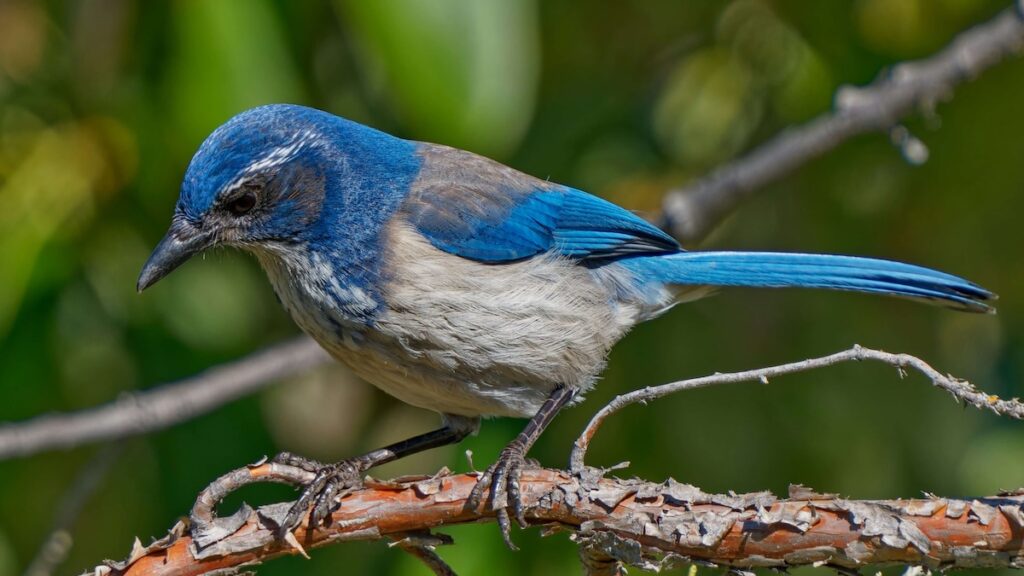
The scrub-jay deserves its own mention, because it’s a good example of where this gets complicated. The Florida scrub-jay is federally listed as Threatened, and its permitting has always been built around habitat. The bird depends on a specific kind of low scrub, and the restrictions are designed to limit habitat impact, especially during nesting season. When a protection is that tightly tied to habitat, this is exactly the kind of case where the rule change raises real questions rather than settling them.
To be honest, how the agencies will handle habitat-based scrub-jay requirements going forward is not fully clear yet. That uncertainty is the point. If you have scrub habitat on or near your site, the answer is to get ahead of it, not to assume the requirement quietly went away.
Why We Still Support the Florida Wildlife Federation’s Concern
We help developers get projects approved. We also live and work here. Those two things aren’t in conflict.
Habitat loss is the leading driver of species decline, and Florida keeps losing wild land to development every year. When the federal government removes a protection that recognized habitat destruction as a real form of harm, it’s reasonable to worry about the long-term effect on species like the panther, the snail kite, and the Key deer, whose survival depends entirely on the land around them staying intact. That’s why we stand with the Florida Wildlife Federation and its partners in raising the alarm on this one.
Call us old-fashioned, but we’ve never seen protecting Southwest Florida’s wild places and getting good projects built as opposing goals. The developers we work with want to do it right. Doing it right has always meant understanding the land before you change it.
What This Means for a Project in Your Pipeline Right Now
For most Southwest Florida developers, the answer to “does anything change for me after September 14?” is no, or very little. If your project involves gopher tortoises, wetlands, eagles, or a local habitat ordinance, your obligations are set by FWC, the Army Corps, FDEP, or your county, and none of those moved.
If your project sits in or near federally listed species habitat (panther range in eastern Collier and Hendry, for example), the federal picture is more fluid, and that’s a reason to talk it through, not to assume you’re clear.
The clearest cautionary tale we can point to is a bald eagle nest. A buyer purchased a site without having it checked for protected wildlife first, and an active eagle nest ended up killing the project. The buffer and management requirements around the nest made the site unbuildable as it was planned, and by then the land was already bought. Notice that the eagle isn’t even an ESA “harm” question, its protections come from a different federal law entirely. That’s the whole point: the surprise that derails a project usually has nothing to do with the definition that just changed. It has to do with whether anyone checked the site before closing.
The Risk of Treating This as a Green Light
We’d be doing our clients a disservice if we let this rule read as “environmental due diligence is optional now.” Three reasons to be careful:
- It’s already in court. The rule is facing legal challenges, and courts can pause or reverse rules. Building a plan around a regulation that may not survive is a gamble with your schedule.
- Lenders and buyers still want clean due diligence. A Phase I ESA, a species survey, and clear title on environmental risk protect the deal, not just the permit. That expectation hasn’t loosened.
- State rules can tighten in response. When federal protection pulls back, states sometimes fill the gap. Florida’s own framework is the layer that matters most here, and it’s the one to watch.
Questions to Ask Before You Change Your Site Plan
Before you assume this rule affects your project, ask:
- “Is any species on my site federally ESA-listed, or is it state-listed by FWC?” (Most of the ones we deal with here are state-listed.)
- “Does my project touch wetlands or waters that trigger a Section 404 or ERP review?” (If so, this rule is irrelevant to that permit.)
- “What does my county or city code require for habitat, buffers, or trees, regardless of federal law?”
- “If the rule gets reversed in court mid-project, what’s my exposure?”
If you’re not sure of the answers, that’s the conversation to have before you close on a lot or finalize a plan, not after.
The Bottom Line
The federal government weakened one piece of the Endangered Species Act. For Southwest Florida developers, the day-to-day reality is mostly unchanged, because the rules that govern our projects live at the state and local level. We support the effort to defend habitat protection, and we’ll keep helping you get through the requirements that actually apply to your site, accurately, the first time.
If you’ve got a project in the pipeline and you want a straight answer on what applies after September 14, reach out. We’ll tell you what you’re really dealing with.
FAQ
Does the ESA rule change mean I can skip a gopher tortoise survey in Florida?
No. In Florida, the gopher tortoise is a state-listed Threatened species regulated by the FWC, not the federal Endangered Species Act. FWC survey and relocation permitting requirements are unchanged by this federal rule.
When does the new rule take effect?
The final rule was published July 14, 2026, and takes effect September 14, 2026. It applies going forward and does not reopen permits or incidental take statements already issued.
Do I still need a wetland delineation and permit?
Yes. Wetland permitting runs through the Clean Water Act Section 404 program and Florida’s Environmental Resource Permit process. Those are separate from the ESA “harm” definition and were not affected.
Which Florida species are actually affected by this change?
The change matters most for species that are federally listed under the ESA, such as the Florida panther, Everglades snail kite, Florida scrub-jay, wood stork, and Key deer, where habitat modification was previously part of the federal analysis. Species protected under state law or other federal statutes are not affected.
Does this change affect Florida scrub-jay permitting?
Possibly, and that’s the honest answer. The Florida scrub-jay is federally listed, and its protections are built heavily around habitat, especially during nesting season. Because those requirements are so habitat-based, the scrub-jay is one of the clearest cases where this rule change raises open questions. How the agencies will apply habitat-based scrub-jay requirements going forward is not settled yet, so if you have scrub habitat on your site, treat it as a reason to plan ahead, not to assume the requirement disappeared.
Could this rule be reversed?
It’s possible. The rule is already facing legal challenges, and courts can pause or overturn it. That uncertainty is one reason we advise clients not to build a project plan around it.